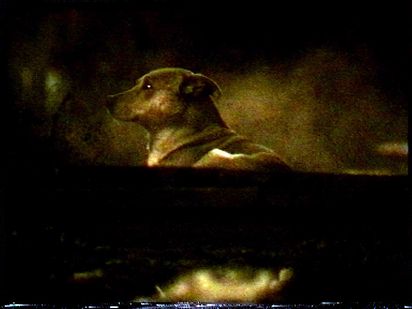
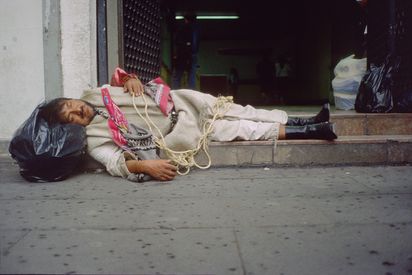
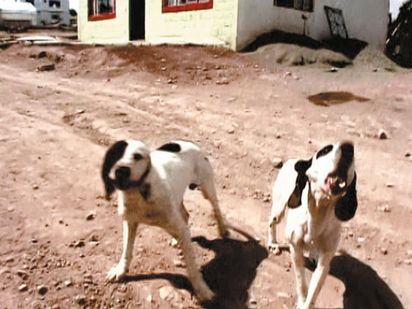
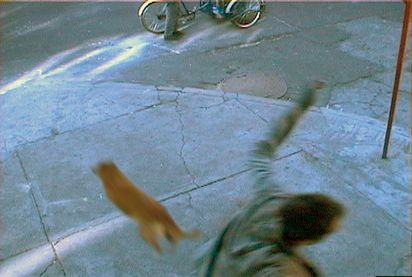
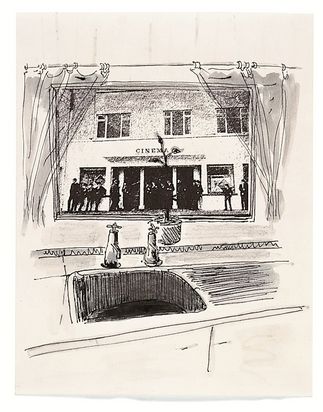
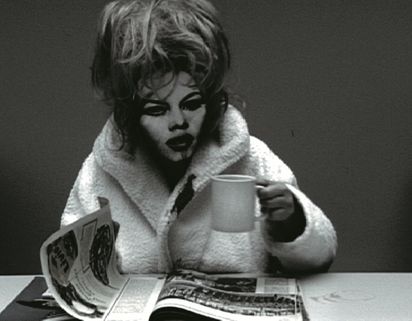
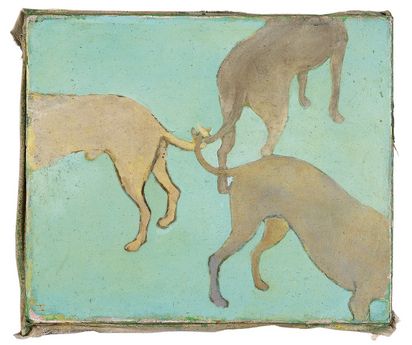
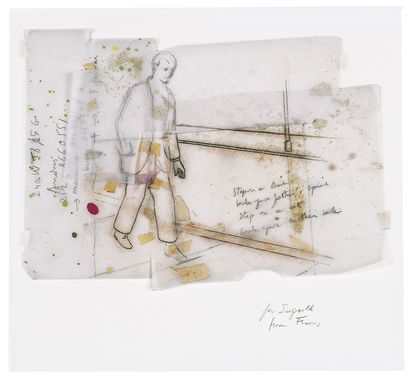
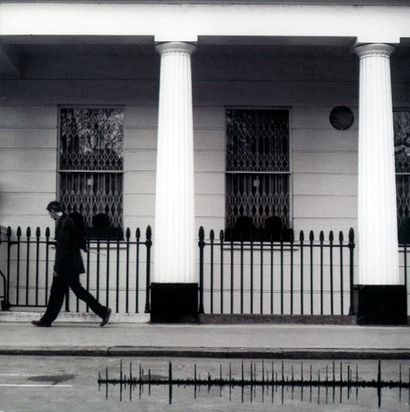
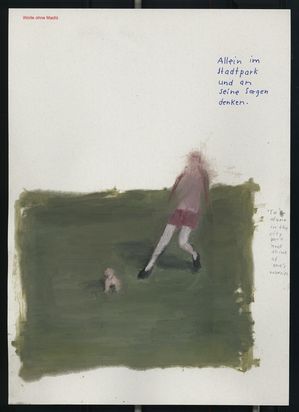
Dogs are said to be man’s best friend, but this adage does not apply to the dogs in the works of the Belgian artist Francis Alÿs. In his art, dogs are a disruptive factor wherever they appear. Daily encounters between humans and animals often have a humorous twist, as in the film The Last Clown (2001). In this short animation, Alÿs graphically captures the misadventure of a stroller lost in thought, who seems to stumble over a passing dog. The flickering black and white images, the accompanying jazz music and the gleeful laughter of the audience in the background recall the familiar slapstick scenes from the early days of film.
The short cinematic sequence is presented as a loop. Upon closer inspection of the scene’s endless repetition, however, it becomes apparent that the man is not tripping over the dog at all. Is it the animal’s supposed friendly tail-wagging that knocks the man of his feet, or is its mere appearance enough to send the contemplative passerby reeling?
The Last Clown refers to an experience Francis Alÿs once had. While on a walk with his friend, the Mexican art critic Cuauhtémoc Medina, the critic stumbled and fell for no apparent reason. The two had been engaged in a heated discussion about art. In memory of this strange incident, Alÿs gave the film’s protagonist the facial features of his friend.
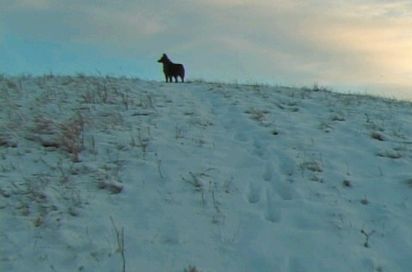
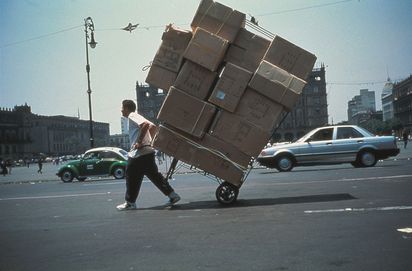
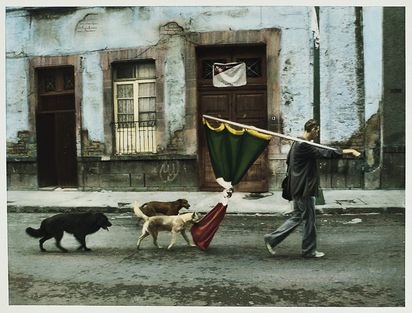
In Alÿs’s work, free-ranging dogs are an allegory of the chaotic conditions in his adopted home Mexico and embody a sense of freedom. The Antwerp-born artist moved to Mexico City to work as an engineer after studying architecture. He began exploring the city as an autodidact with his cinematic walks. These became the starting point for all of his artistic work, characterized by a wide range of media.
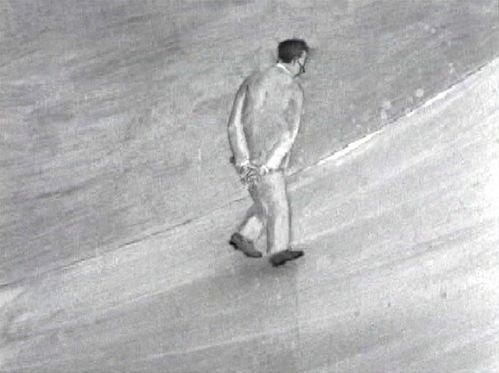
The Last Clown, b/w version
- Year2001
- EditionEdition 4/4 (+ 1 AP + 1 EC)
- Material/Techniquesingle-channel video installation (b/w, sound), Drawing
- DimensionsDrawing: 29,2 x 37 cm
- Length3' 52'' loop
- CategoryMedia Art
- KeywordsDaily Life
Clown
Movement
Dog