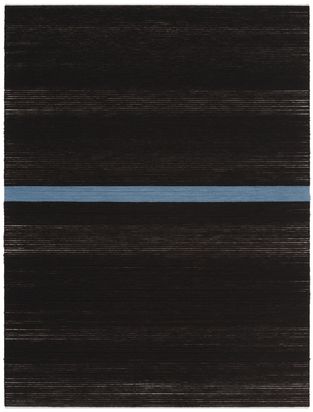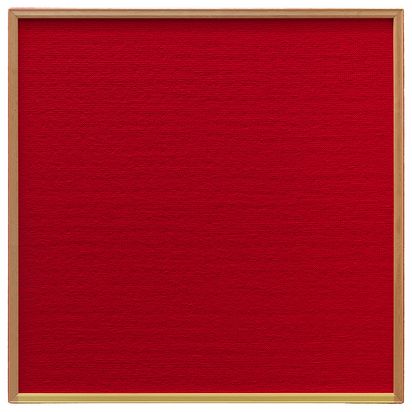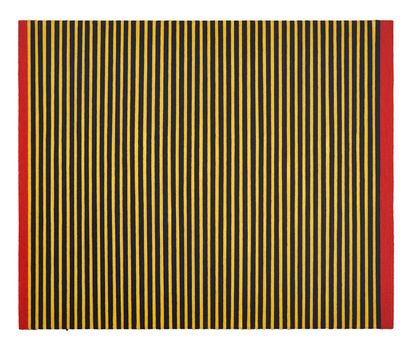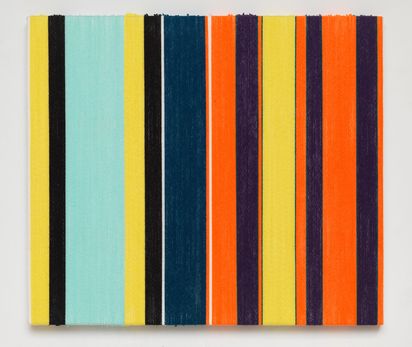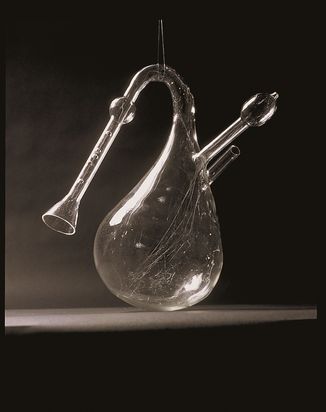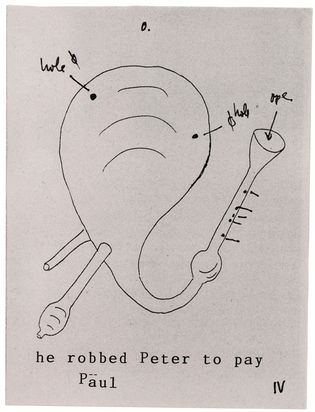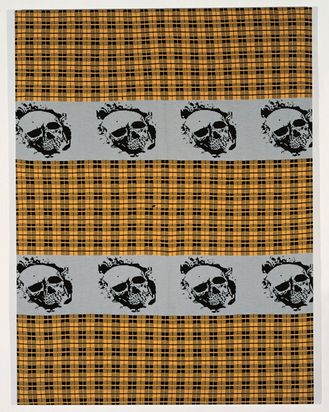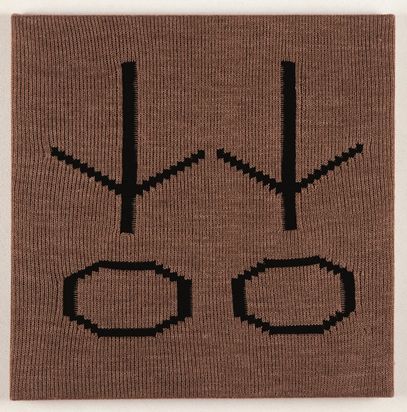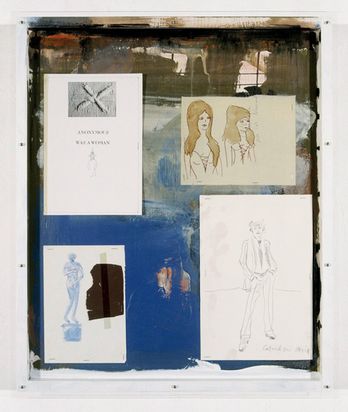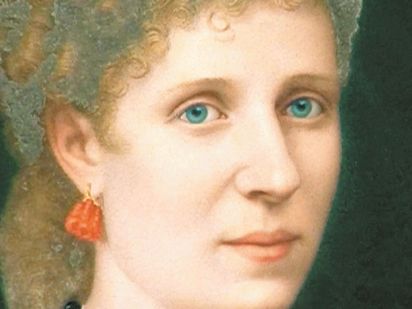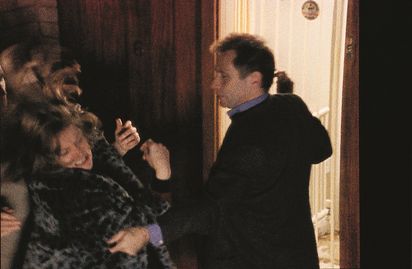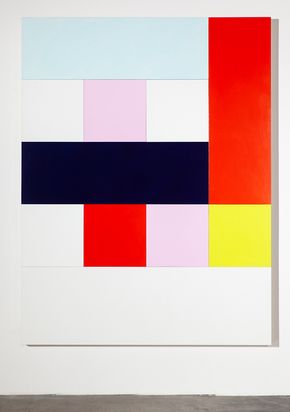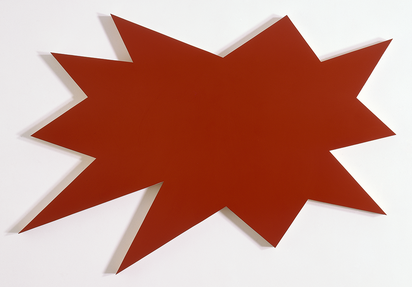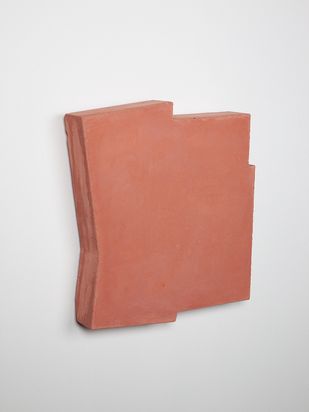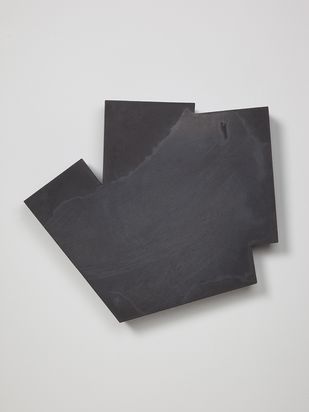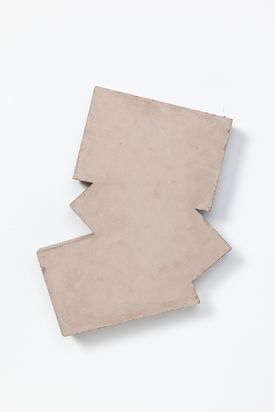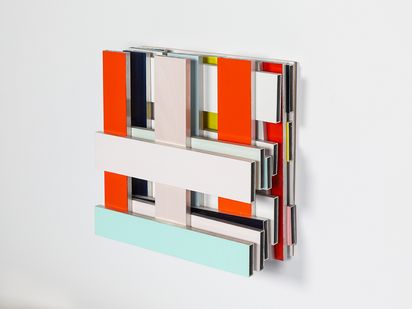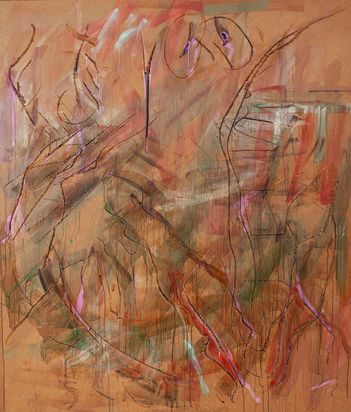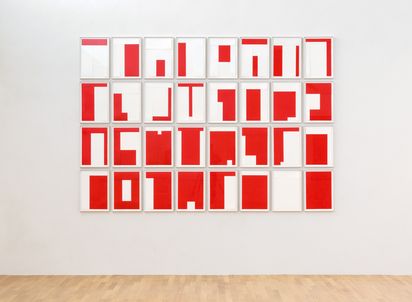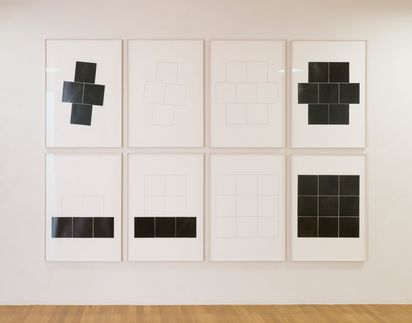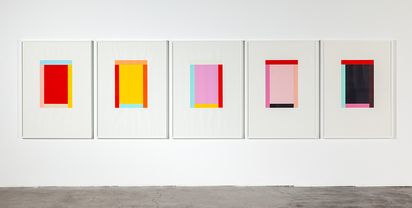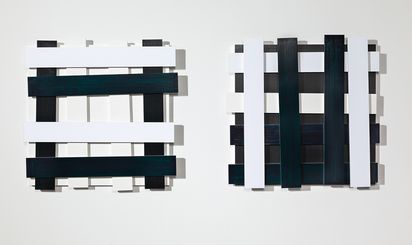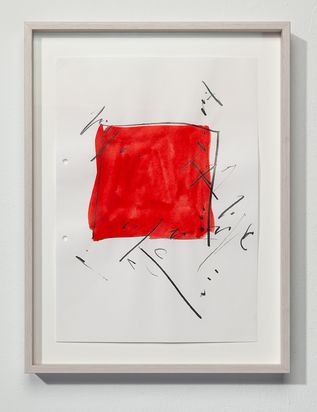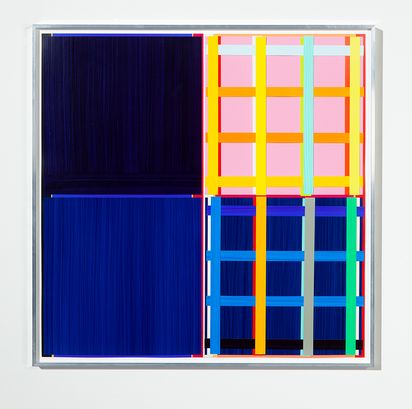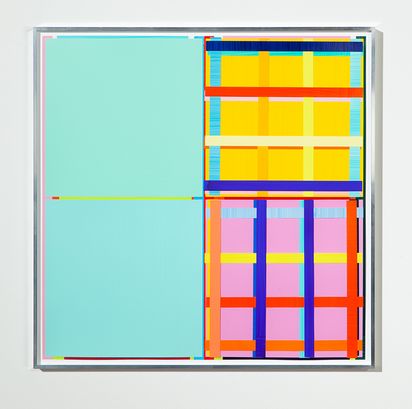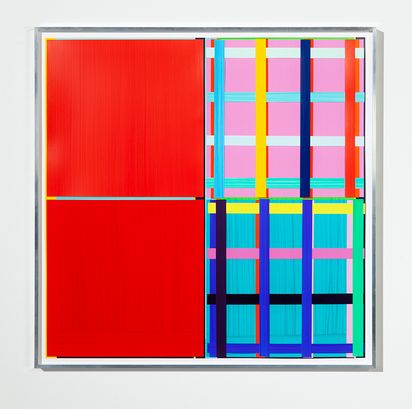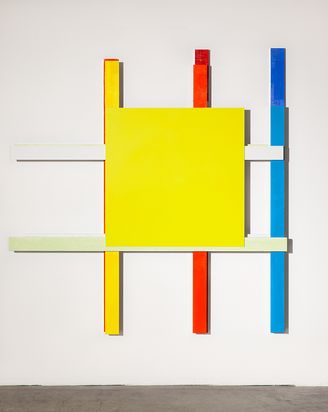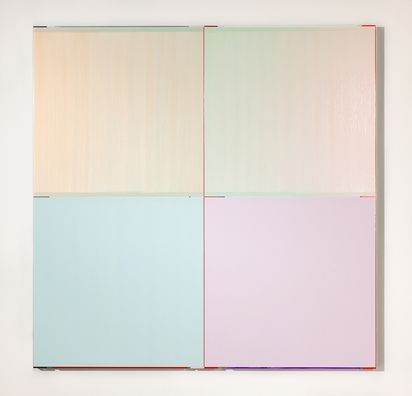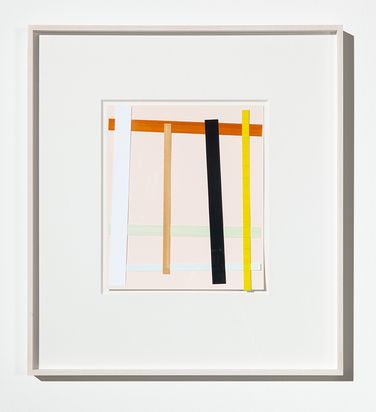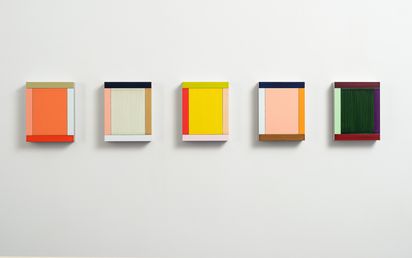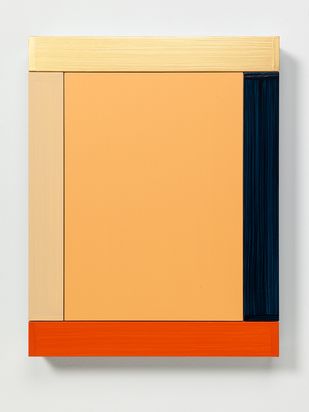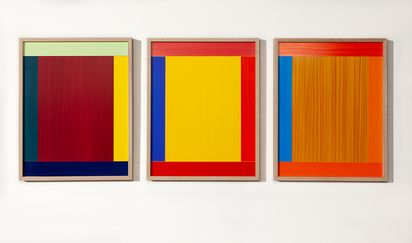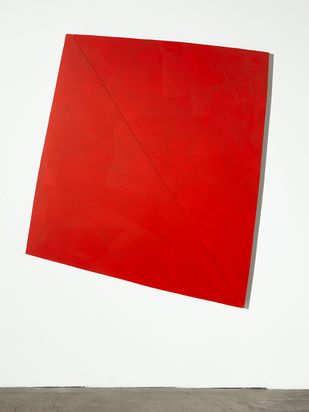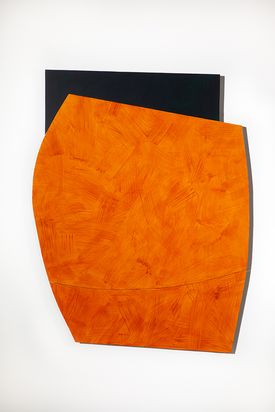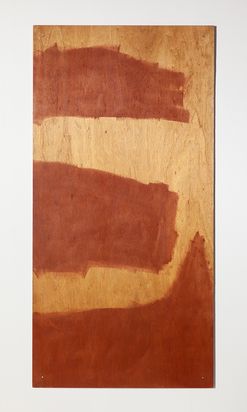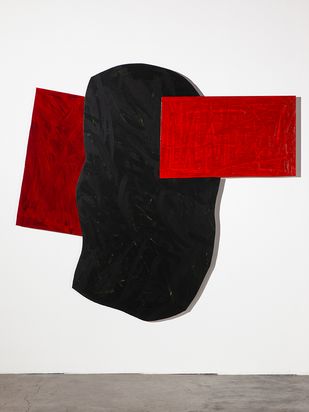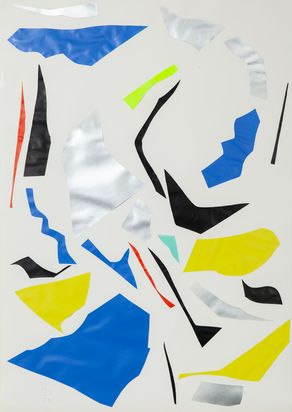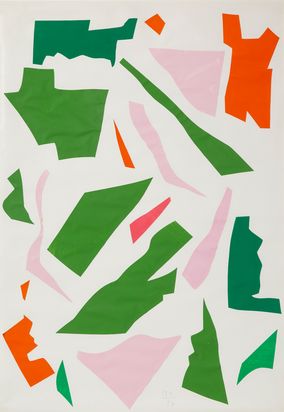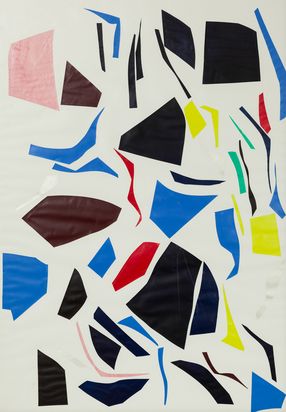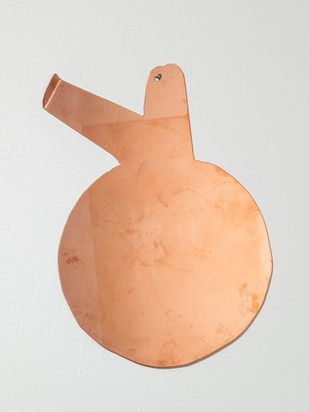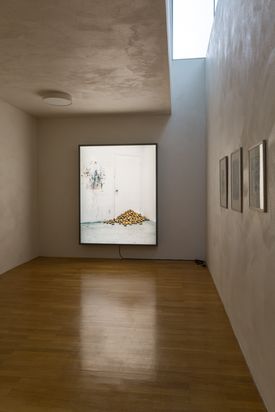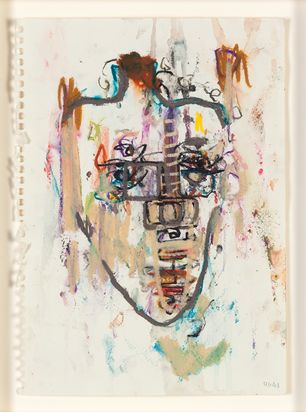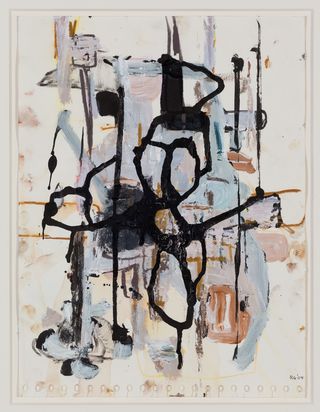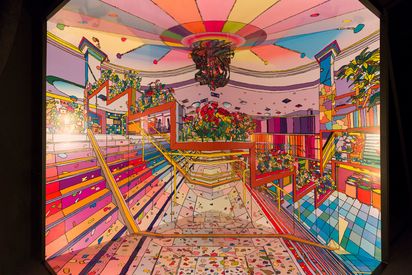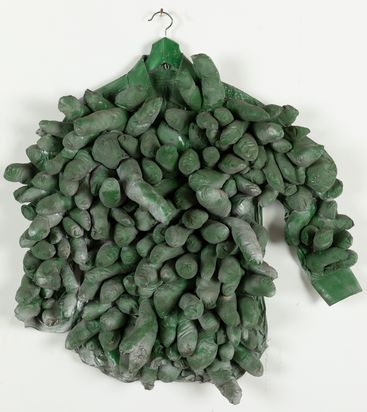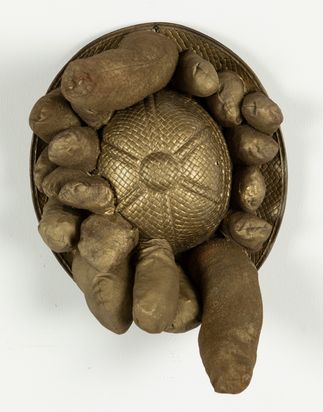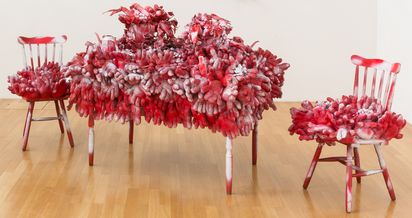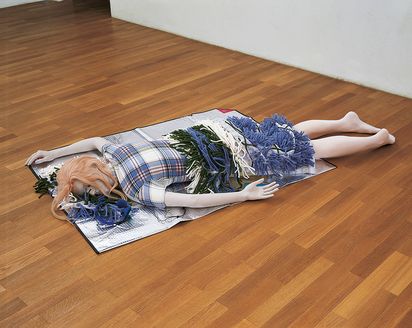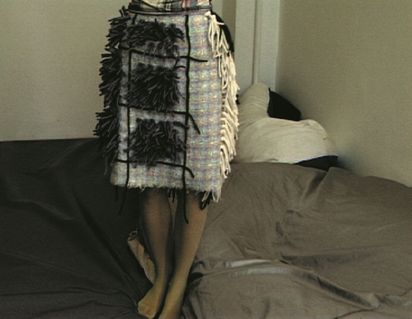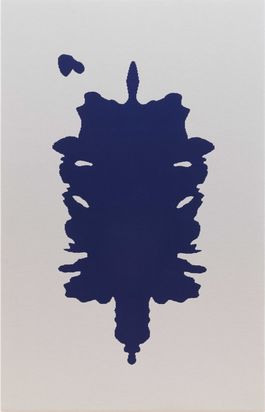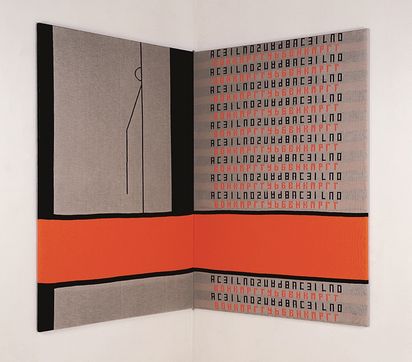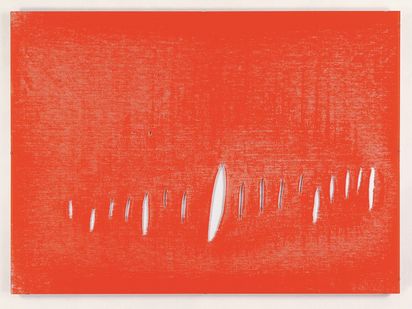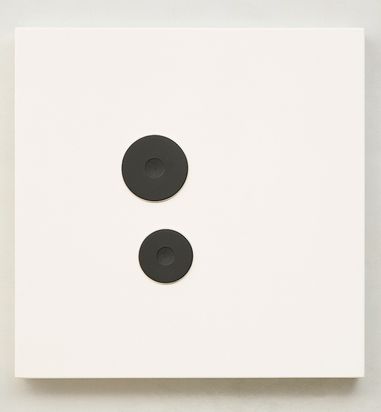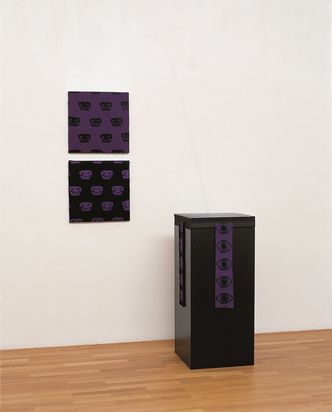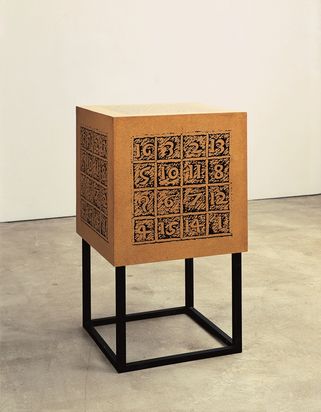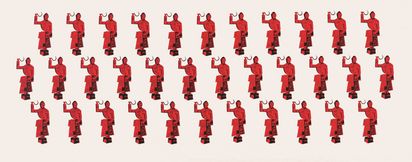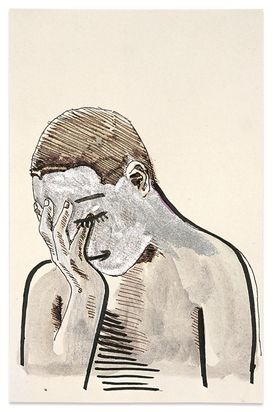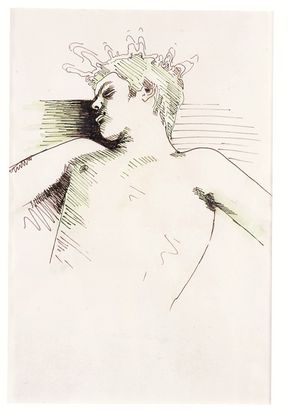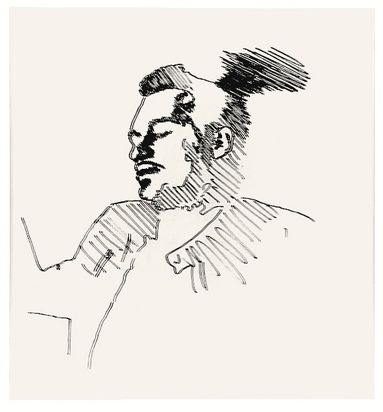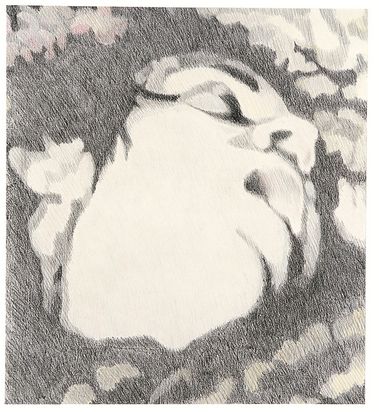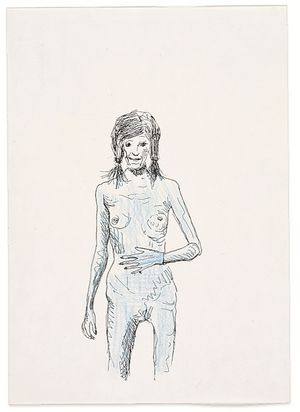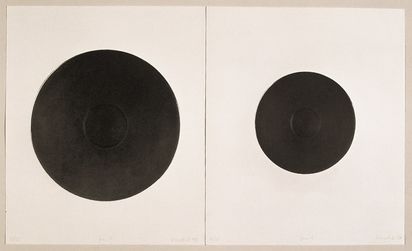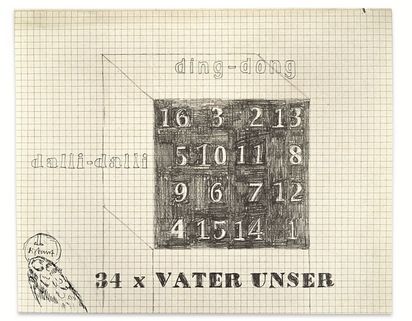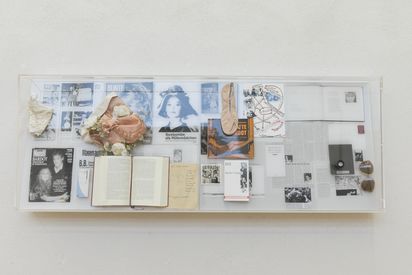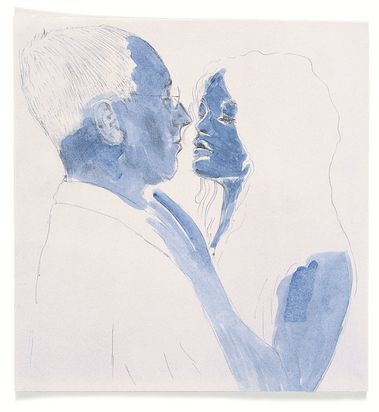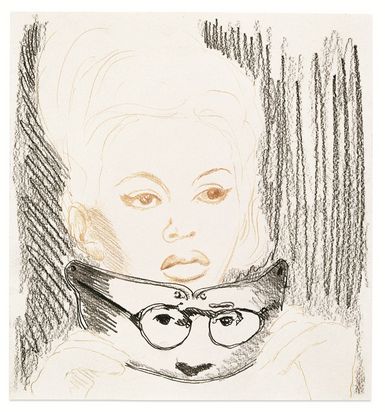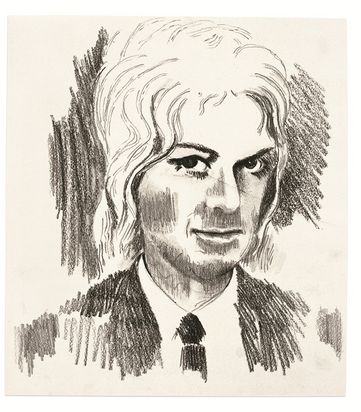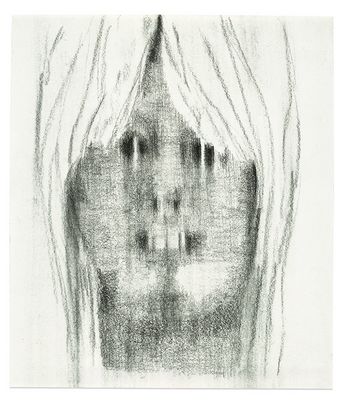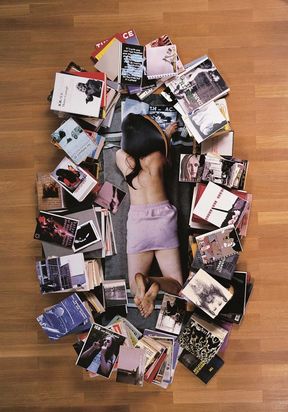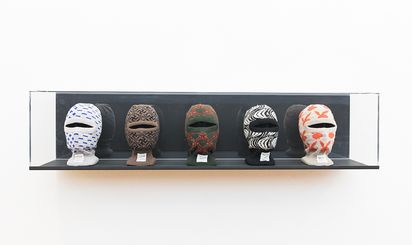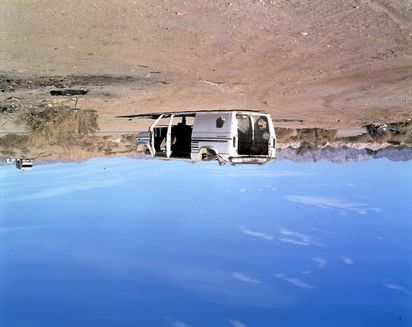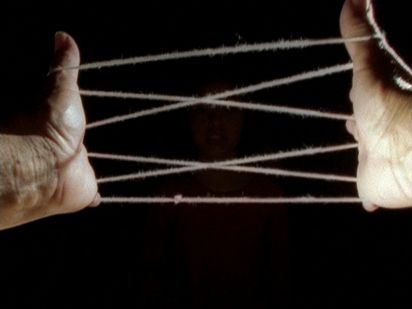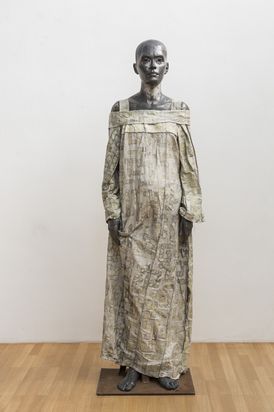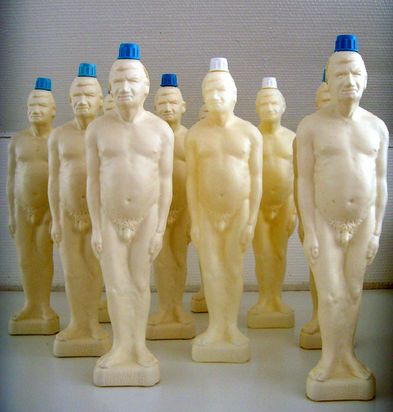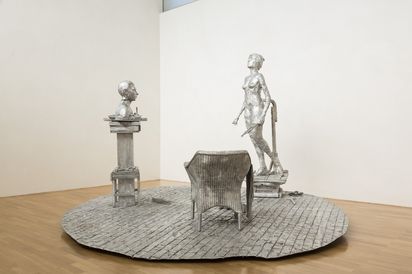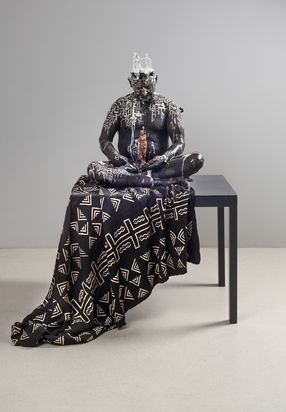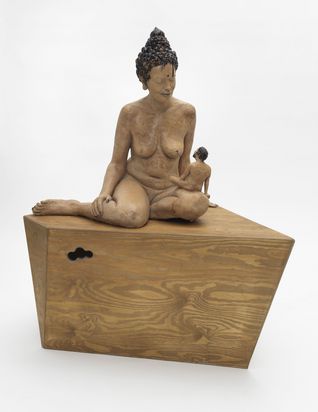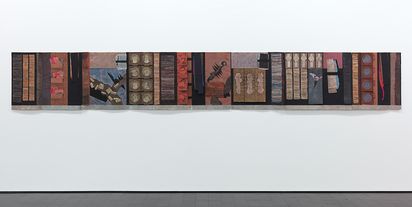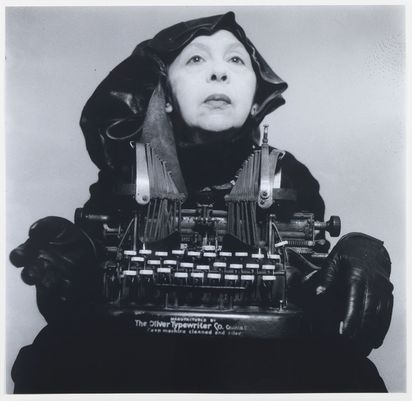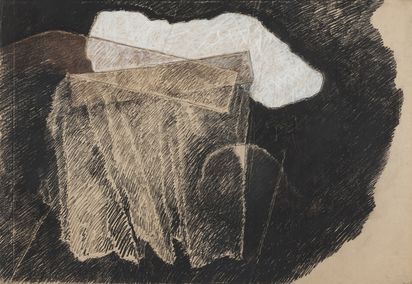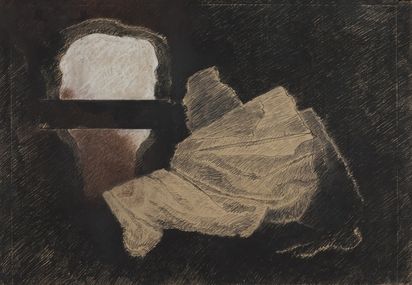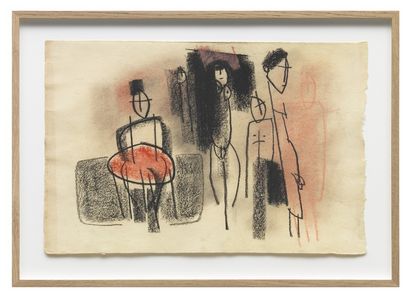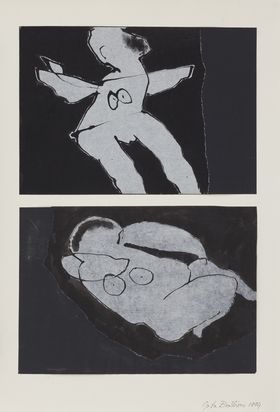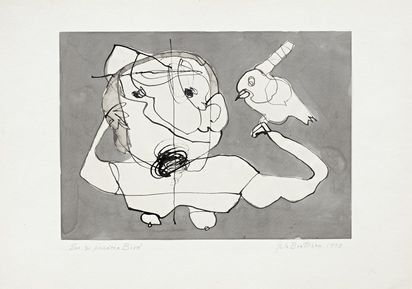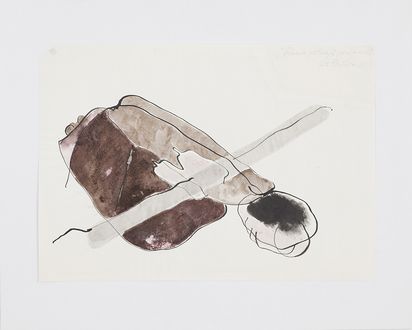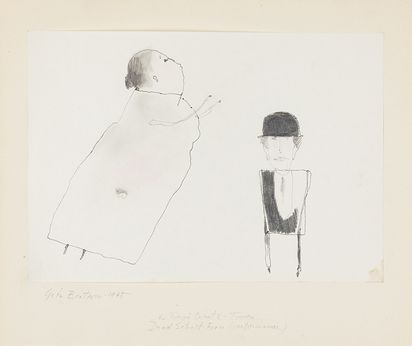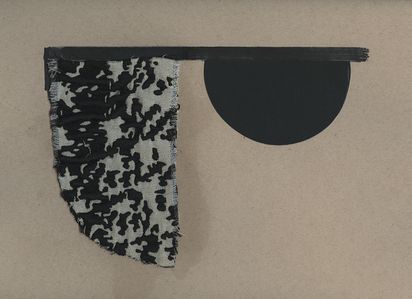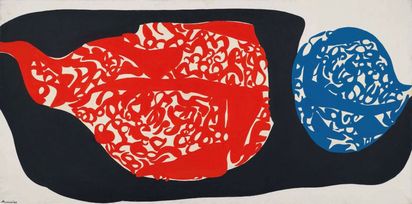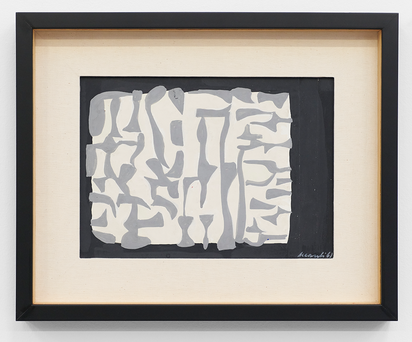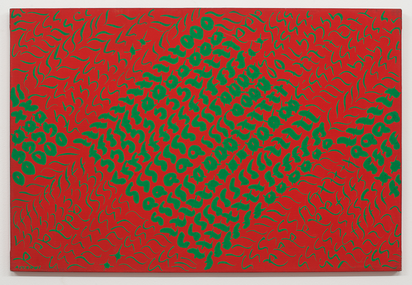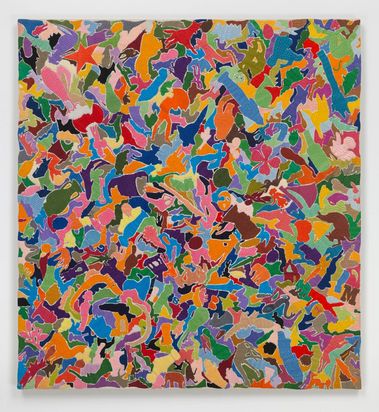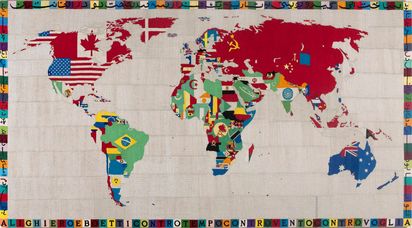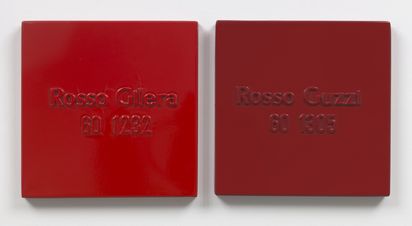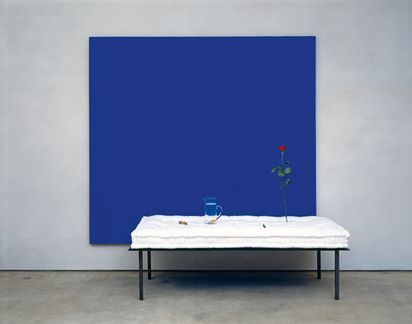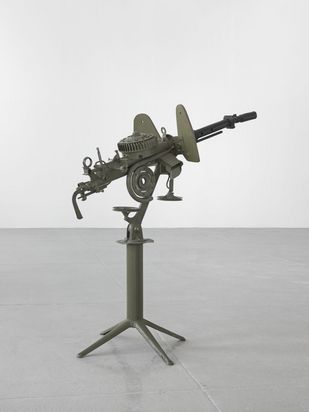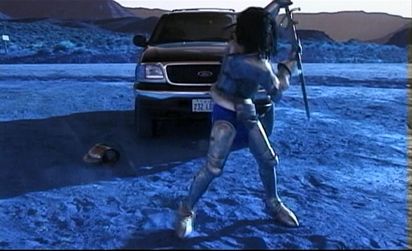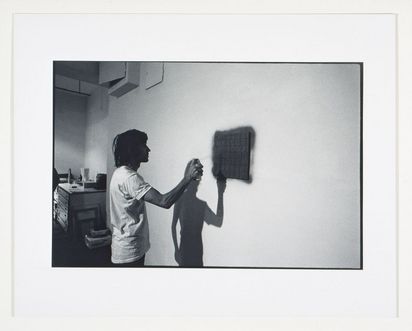
Rosemarie Trockel’s work is extremely multifaceted and encompasses a wide variety of artistic media. The artist became known in the 1980s for her machine-made works from knitted fabrics and her minimalist-looking sculptures featuring hotplates. In the works exhibited here, Trockel explores the meaning of artistic practice, social role models, and power structures.
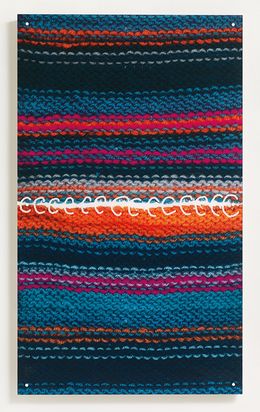
Wool was long considered an inferior material, one used mainly in arts and crafts. It is also a material traditionally employed by women. Trockel examines whether this negative attribution persists when woolen works are placed in a different context.
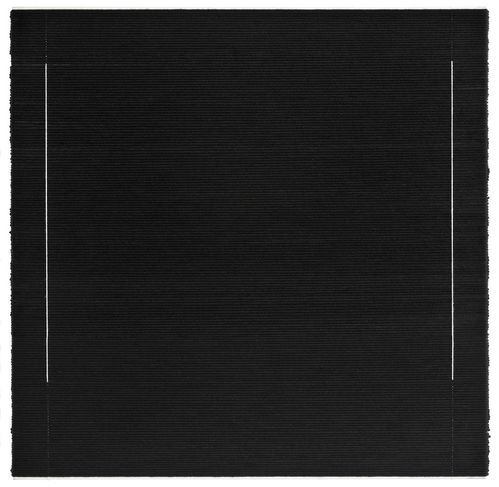
Her wool pictures recall color field painting and minimal art. To achieve this effect, the artist stretches colored threads of acrylic wool horizontally and vertically across the canvas in a dense weave; from a distance, the works look like abstract paintings. The images are enclosed in Plexiglas boxes that both protect the objects and lend them a sculptural character.